Water the soil, not the calendar
A rain gauge and a quick soil check can make vegetable watering more useful than a rigid daily schedule.
A dry soil surface does not always mean the entire root zone is dry. Before reaching for the hose, check below the surface and consider the rain your garden has already received.
Use a starting point, then observe
About one inch of water per week is a common starting point for an established vegetable garden. Soil, weather, mulch, and plant size change the actual need; containers and new seedlings need their own checks.
- Use a rain gauge instead of guessing from the weather forecast.
- Check moisture beneath the top layer of soil.
- Apply water slowly near the roots so it can soak in.
- Pause if water puddles or runs away from the bed.
Mulch can help retain moisture. More water is not always helpful: saturated soil leaves roots short of oxygen.
Try recording rainfall and watering for one week. The notes may reveal that the bed stays moist longer than expected, or dries much faster during windy weather.
What tells you it is time to water?
Further reading: University of Minnesota Extension: watering the vegetable garden.
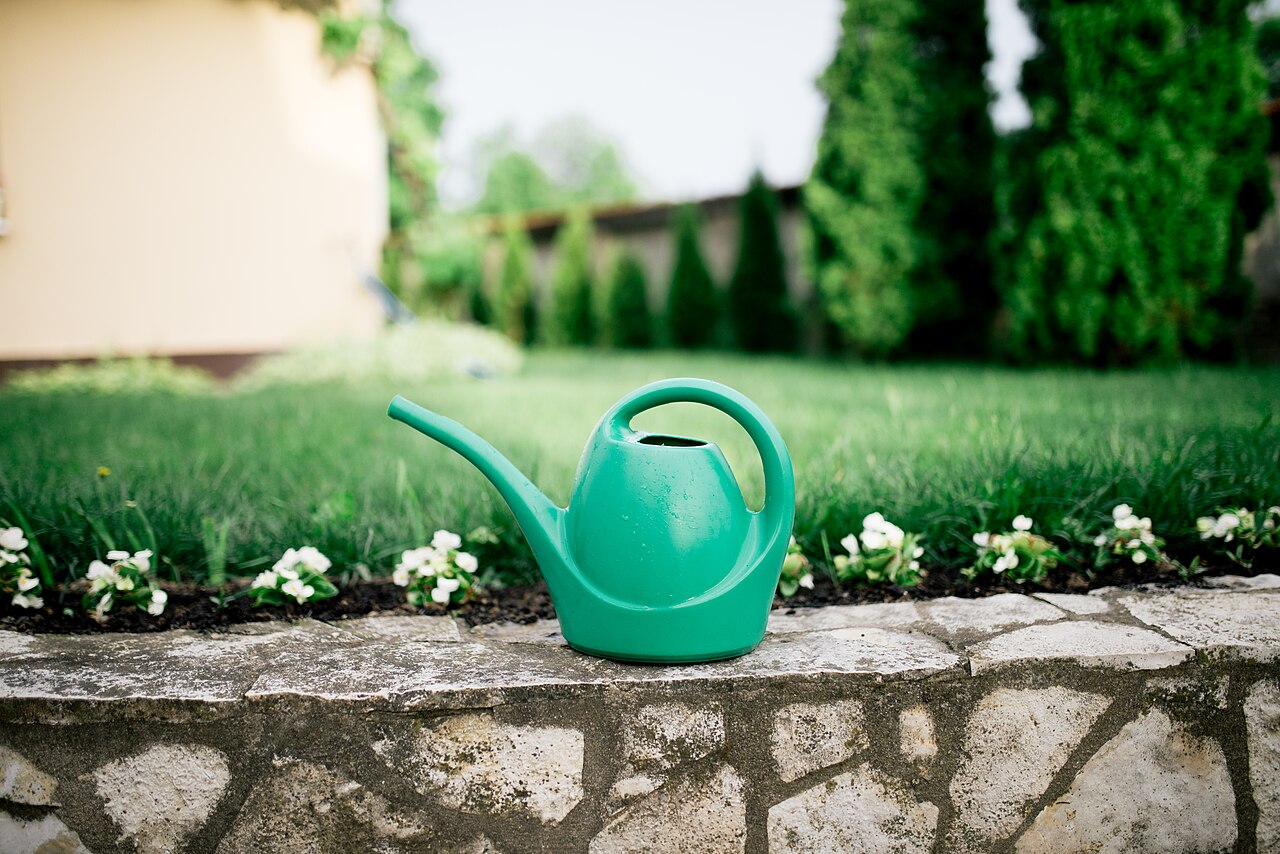
Photo: A watering can beside garden plants; an illustrative photograph. Credit: Shixart1985 / Wikimedia Commons. CC BY 2.0. No editorial alterations.

1 view

Chirvy Editor
Editorial account for Chirvy.
Replies 0
Log in to join the conversation.
It is quiet here. Be the first to reply.