Microsoft opens its multi-model Copilot harness to Foundry developers
Microsoft says developers can use the agent runtime behind several Copilot products through Foundry, with an SDK or a managed cloud option.
Microsoft is making its Copilot harness available through Microsoft Foundry. The company describes a harness as the software around an AI model: it supplies instructions, context, tools, an execution environment, and controls so an agent can complete a task.
According to Microsoft, the same foundation already powers products including Copilot Studio, the GitHub Copilot app, the CLI, and VS Code. Developers can download an SDK or run the harness as a managed cloud service. Microsoft says it supports multiple model families, so teams can change models without rebuilding the surrounding workflow.
The useful question for developers is whether a shared runtime makes agent behavior easier to test and govern across products. Availability is an announcement, not evidence that every agent built on it will be reliable. What would you want to measure before trusting a long-running AI agent?
What the harness actually does
A model can produce text, but an agent also needs a loop that decides when to call tools, what context to keep, and how to recover when a step fails. Microsoft says its harness supplies that surrounding machinery, including a sandbox and governance controls. This is why the announcement concerns developer infrastructure rather than a newly released language model. The company says the runtime began with GitHub engineering and now underpins several Copilot surfaces across Microsoft.
Developers are offered two routes: download an SDK or use a managed Foundry service. Microsoft also points to support for open standards such as MCP, skills and plugins, and says the system can work with more than 20 frontier models or a customer key. Those are flexibility claims; the exact model choices, regional availability and pricing need checking against current Foundry documentation before a production rollout.
At a glance
| Component | Role |
|---|---|
| Model | Generates and reasons over candidate steps |
| Harness | Supplies context, tools, execution and controls |
| Developer | Defines task, permissions and acceptance tests |
What to watch next
A sensible pilot would compare the same workflow across models, measure time and cost per completed task, and log failures that need human intervention. The benefit of a common harness is easier comparison, but the announcement itself provides no universal reliability guarantee.
Why an agent needs more than a model
The newest model often receives the headline, yet an agent's behavior depends on many less visible choices. A model can propose an answer; a harness decides how a task enters the system, how instructions are prioritized, when tools are called, which results are kept in context, and when the task should stop. A coding agent, for example, may need to read a repository, edit a file, run tests and explain its changes. If it cannot keep track of the user's goal across those steps, a stronger model alone will not make the workflow reliable. The harness is where an organization can enforce permissions and observe the sequence of actions. That is the important distinction in Microsoft's announcement. It is offering a reusable execution layer for developers who want to build agents, rather than asking every team to write its own loop around a model API. The value depends on how much useful behavior the layer supplies in practice and how easy it is to inspect when something goes wrong.
What “multi-model” really changes
Support for many model families does not mean every model performs equally well on every task. It means the surrounding application can, in principle, keep much of its workflow while a developer changes the model carrying out a step. A team might favor a fast model for extraction, a stronger one for a difficult code change, and a specialized model for another type of input. The hard part is maintaining a consistent record of what was requested, what information each model saw, and which one produced the final action. Routing can lower costs when simple work stays on efficient models. It can also add complexity: a failed attempt followed by an escalation uses more time and may consume more tokens than a direct call. Microsoft describes choice as a core benefit, but customers should inspect the routing rules and logs available to them. The meaningful question is not how many models a platform lists; it is how accurately it chooses and how readily a developer can override that choice.
The SDK and managed service are different commitments
The downloadable SDK and managed Foundry option serve different operating preferences. An SDK can give developers more direct control over integration and deployment, but someone must maintain its version, configuration and compatibility with the rest of the application. A managed service moves more of the execution environment to Microsoft. That may simplify rollout for teams already using Foundry, while raising questions about data paths, service boundaries and vendor dependence. Neither route removes the need for an application-specific design. A research assistant and a code-writing agent require different tools, approvals and stopping rules. A team should map those needs before choosing an execution model. It should also verify the precise feature availability, usage terms and costs for its region and plan, because a broad announcement is not a substitute for an implementation guide. A small reversible pilot is the most honest way to discover how much plumbing the harness actually saves.
Controls matter most at the tool boundary
An agent becomes consequential when it can act outside a chat window. Reading a document, opening a repository or querying a database creates access to information; posting a message, changing code or updating a record creates effects. Good controls should make those permissions explicit. A developer can then decide which operations are read-only, which require a person to approve a proposed change, and which may be automated within a narrow scope. The harness should log the model's tool calls and the resulting state, not just the final prose answer. That makes it possible to investigate errors and compare runs. Microsoft's reference to a sandbox is relevant here, but a sandbox is one component of a wider design. Secrets, network access, role boundaries and rollback all require attention. The safest test is a realistic task where the agent must handle an unexpected result without silently broadening its authority.
Open standards and portability
Microsoft points to MCP, agent skills and plugins as parts of the ecosystem it wants the harness to support. Standards can make a tool or capability easier to connect across products, but interoperability is not automatic. Two platforms might accept the same protocol while exposing different permission models, error handling or deployment limits. A useful portability test is to take one modest workflow, run it through two supported environments and compare the changes required. Check whether tool descriptions, authentication, logs and human approval work the same way. The broader benefit of a shared harness would be fewer product-specific rewrites as models evolve. The corresponding risk is that the system around the model becomes a new kind of lock-in if important behavior is opaque or available only inside one vendor's managed service. Documentation and exportable traces will matter more than a general claim of openness.
How to evaluate a real pilot
Start with a task a human can score: for instance, update a small codebase and pass a known test suite, or answer questions from a controlled document collection with verifiable citations. Run the same input repeatedly because one successful demonstration says little about consistency. Record completed tasks, wrong answers, unneeded tool calls, elapsed time, model usage and human corrections. Include cases that should end in a refusal or a request for more information. If the system routes among models, compare the route with a fixed-model baseline so the gain can be separated from the underlying model's capability. The acceptance threshold should reflect the cost of a mistake. Drafting a low-stakes summary and changing a production configuration deserve different standards. Microsoft's platform may simplify the experiment, but the customer's evaluation design determines whether its results are trustworthy.
What this launch does and does not establish
The announcement establishes that Microsoft is making the Copilot harness available through Foundry and describes an SDK and managed route. It also tells us Microsoft has adopted this layer across a number of Copilot products. It does not prove that any particular agent built by a customer will finish a complex job safely, nor does it show that a model router always picks the cheapest satisfactory path. Those claims require workload-specific evidence. The development is significant because the competition in AI agents is shifting from the model alone toward the operating system around it: context, tools, supervision and measurable outcomes. Developers should welcome a reusable foundation while keeping a disciplined view of its boundaries. The first useful benchmark is whether it lets a team build one auditable agent faster and operate it with fewer surprises than its existing approach.
Where the actual product boundary sits
The word “Copilot” now covers multiple Microsoft and GitHub products, which makes the architectural story easy to overread. A shared harness does not imply that the same application features, permissions or user interfaces appear everywhere. A coding surface can expose repository tools; a business workflow may connect to documents and enterprise systems. Each product still decides what an agent can see and do. Microsoft’s statement that the runtime powers several products is evidence of internal reuse, not a promise that a customer can clone every Copilot feature with the SDK. Developers should identify the minimum capabilities they need and read the product-specific documentation for those capabilities. During a pilot, it helps to document the precise boundary between platform features and application code: who creates the task, who stores the trace, who handles retries, and who approves a consequential action. This separation makes both ownership and costs easier to understand.
Reliability is a system property
A model may get a single answer right while an agent fails on a longer sequence. A missing file, changed API response, ambiguous instruction or insufficient permission can turn a reasonable first step into a wrong final result. The harness can help by preserving context, exposing tools and making retries explicit, but the application still needs clear success criteria. A useful design specifies what the agent should do when it cannot verify an answer: stop, surface uncertainty, or ask a person. It should not quietly invent a successful outcome. The same principle applies to model switching. If a first model fails a check and a second model continues, the record should show which step failed and whether the second model saw the first model’s error. Without that trace, a polished final answer may hide the path that produced it. Consistency across a series of real tasks is the stronger evidence of reliability.
Questions procurement teams should ask
For an organization evaluating Foundry, a technical demo is only one part of the decision. Ask how long execution traces are retained and who can access them. Determine where task data and tool results are processed, what controls exist for external network calls, and how model usage is charged when routing or retries occur. Examine the lifecycle of the SDK: release cadence, compatibility promises and migration guidance. Ask whether a team can export enough logs to investigate an incident without relying entirely on a vendor dashboard. These are ordinary operational questions, not a claim that the new harness has a particular defect. They are especially relevant when an agent may touch private information or make changes on behalf of a user. Clear answers turn a platform promise into a plan that security, finance and engineering teams can review together.
A practical first use case
Consider an agent that triages a small set of incoming bug reports. It can read the report, search a repository and suggest a likely component, while a human decides whether to open a ticket or change code. This keeps the initial permission boundary narrow and gives the team a way to score the result. Run it against historical issues whose outcomes are already known. Measure whether it finds the right area of code, whether it cites relevant files, how often it calls unnecessary tools, and whether its explanation is understandable to a maintainer. Only after that should the team consider broader actions such as preparing a patch. The example illustrates why an agent platform is useful: much of the work is coordination around a model. It also illustrates why governance must be designed for the task, since a good answer is different from authority to edit a production repository.
The longer-term competitive question
If harnesses become common, developers may compare them the way they compare databases or cloud runtimes: by operational behavior, price, portability and the strength of their ecosystems. Model quality will remain important, but a developer may choose a slightly weaker model in a better-controlled workflow over a stronger one with poor observability. Microsoft’s move puts an established Copilot execution layer into a customer-facing platform. Competitors can respond with their own orchestration tools, open frameworks or more transparent model routing. The outcome is not predetermined by this announcement. A useful market comparison would run a shared task suite across platforms and include total cost, human review time and failure recovery, not only a model benchmark score. Those measures describe the full job the user actually needs done.
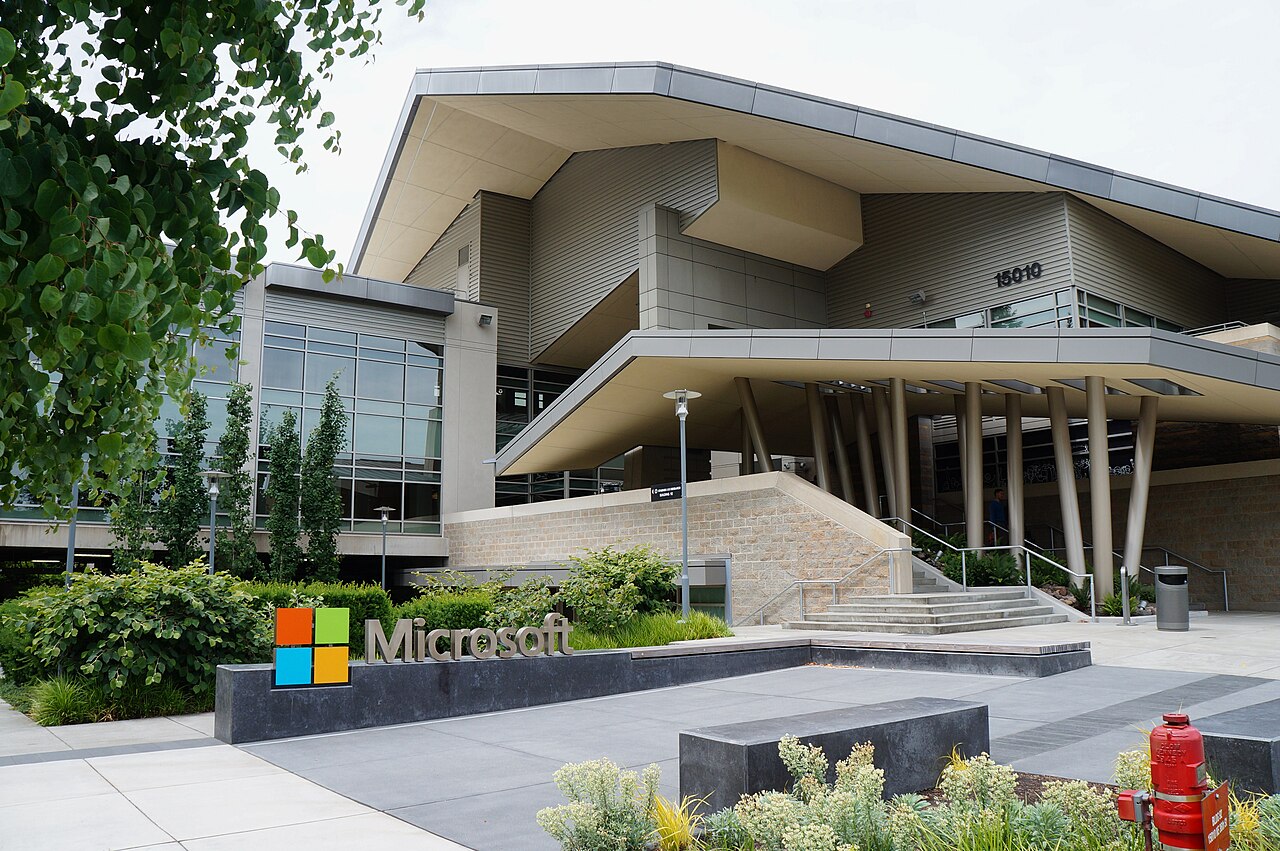
Illustrative photograph: Building 92 of Microsoft Redmond Campus - panoramio.jpg by Jiaqian AirplaneFan, CC BY 3.0. The image does not depict the announced product or event.

Primary source: Microsoft's October 28 announcement (2026-10-28). Original Chirvy analysis updated October 30, 2026.
1 view
Chirvy Editor
Editorial account for Chirvy.
Replies 0
Log in to join the conversation.
It is quiet here. Be the first to reply.