NVIDIA and C-BRAIN are building AI tools for dementia research
The research consortium is using open-source tools to analyze scientific data and test hypotheses, while keeping clinical claims in perspective.
The Consortium for Biomedical Research and AI in Neurodegeneration, known as C-BRAIN, is working with NVIDIA on open-source AI tools for dementia research. NVIDIA says the consortium includes 18 institutions and aims to make fragmented scientific data more useful to researchers.
Two named tools are OpenScientist, which can propose hypotheses and run analyses on supplied data, and InsightEngine, which checks ideas against scientific literature and a biomedical knowledge graph. NVIDIA describes a hybrid approach for sensitive datasets so some information can remain with the institution that holds it.
These tools are intended to speed research, not to diagnose patients or cure dementia. Their value will depend on reproducible findings and careful data governance. What part of medical research is most ready for an auditable AI assistant?
The data problem the project is tackling
C-BRAIN says dementia research is slowed by results and datasets scattered across institutions, including unpublished and negative findings. The consortium launched in November 2025 and has 18 member institutions. NVIDIA describes a hybrid architecture in which some data is centralized while other information stays at the institution that governs it. That design matters because patient data, proprietary datasets and research agreements cannot simply be pooled into one open database.
The group has built two named tools. OpenScientist takes a scientist’s question and supplied dataset, proposes hypotheses and runs analyses intended to be auditable. InsightEngine checks proposed ideas against papers, supplied data and a biomedical knowledge graph. NVIDIA reports fast analyses in case studies, but such examples do not prove that every generated hypothesis is correct or that a treatment is closer to patients. Independent replication remains essential.
At a glance
| Tool | Reported research role |
|---|---|
| OpenScientist | Hypotheses and analysis on supplied datasets |
| InsightEngine | Evidence checks against literature and a knowledge graph |
| Hybrid data setup | Keeps some governed data at its institution |
What to watch next
The strongest outcome would be a specific biological finding that outside labs can reproduce. Until then, this is infrastructure for research, not a diagnostic service or a dementia therapy. Privacy rules, provenance and negative results all matter as much as model speed.
The research bottleneck is not one missing model
Dementia research spans biology, imaging, clinical records and years of follow-up. A scientist trying to connect a new finding with older work may need to search papers, request access to datasets and reconcile measurements made by different groups. NVIDIA and C-BRAIN describe this fragmentation as a reason to build AI tools for research. The aim is not to have a chatbot pronounce a diagnosis. It is to help scientists find relevant evidence, frame a testable question and analyze permitted data more quickly. That distinction matters because a fast summary can be wrong and a plausible correlation can have no causal significance. The consortium’s work will be most convincing when it produces findings other laboratories can reproduce. Until then, the project is an attempt to improve research infrastructure around a difficult disease area.
What C-BRAIN brings together
C-BRAIN, short for the Consortium for Biomedical Research and AI in Neurodegeneration, launched in November 2025 according to NVIDIA’s account. It has 18 member institutions across academic, philanthropic, pharmaceutical and research organizations. A consortium can pool expertise that no single lab holds: one group may understand clinical cohorts, another may build computational methods, and a third may validate a biological mechanism. Coordination is also a challenge. Data rights, definitions and incentives differ between partners. If a tool is to learn from or compare these sources, it needs a clear record of where each piece of information came from. A strong system should let a scientist trace a claim back to data or a paper and state when the evidence is incomplete. The headline partnership is therefore only the first step in a complex governance and engineering project.
Why “dark data” matters
The term “dark data” in this context refers to useful research information that is difficult for other scientists or AI systems to access. It may include negative findings, unpublished results or datasets governed by an institution. Negative results can be valuable because they prevent others from repeating an unproductive experiment, but they are often less visible than positive papers. A model trained only on published success stories may inherit that bias. Unlocking these sources does not mean making them public without permission. Some records may contain sensitive information or be covered by agreements. The scientific goal is to make appropriate analysis possible while preserving the rights and privacy attached to the data. That requires access controls, documentation and a way to audit which evidence supported an output.
A hybrid data architecture
NVIDIA says C-BRAIN uses both centralized and federated approaches. In a centralized pattern, permitted data moves to a common environment for analysis. In a federated pattern, computation can occur where a dataset is held and the data need not leave the institution. The latter can reduce some governance obstacles, but it introduces practical complications: institutions may have different hardware, schemas and quality controls. A shared model or analysis must still deal with inconsistent measurements and the possibility of leaking information through results. A hybrid setup lets the consortium choose a method based on the dataset and question. Its success will depend less on the phrase “federated AI” than on concrete rules for consent, access, validation and reproducibility across the participating sites.
OpenScientist and InsightEngine do different jobs
The two tools named by NVIDIA should be evaluated separately. OpenScientist accepts a research question and supplied data, then proposes hypotheses and runs analyses intended to be verifiable. InsightEngine tests ideas against literature, datasets and a biomedical knowledge graph. One emphasizes analytical exploration; the other emphasizes checking a claim against existing evidence. Both can help a scientist navigate a large search space, but neither can turn weak data into proof. A generated hypothesis should be described as a hypothesis until it survives an independent test. A literature check should show which studies support or contradict a statement and how directly they apply. The most useful output might be a clear explanation of uncertainty or a contradiction that prevents an expensive experiment based on a false premise.
The reported speed gains need context
NVIDIA describes case studies in which OpenScientist performed analyses in minutes that domain scientists estimated would otherwise take weeks or months. That is a notable claim, but the comparison depends on the task. Software can rapidly execute a prepared analysis, while the human timeline may include finding data, framing the question and validating results. A fair benchmark would specify what inputs were ready, how much expert review followed and whether the automated answer reached the same scientific conclusion. The reported cost per run also excludes some of the wider costs of maintaining infrastructure and curating data. Speed is valuable when it frees scientists to design better experiments; it is harmful if it simply creates more low-quality hypotheses than teams can test.
Why causality is a higher bar
A pattern in biological data can reflect a real mechanism, a confounding variable or a quirk of measurement. Dementia is especially complex because disease processes unfold over time and interact with age, genetics, environment and care. C-BRAIN says it wants to move toward discovering causal mechanisms of brain aging and Alzheimer’s disease. That ambition requires experiments and careful study designs, not just stronger prediction. An AI system could suggest which molecule, pathway or subgroup deserves closer examination. Scientists would then need to test whether changing that factor actually changes a relevant outcome. The path from a hypothesis to a prevention or treatment is long. Reporting the distinction protects readers from assuming that faster computational analysis translates directly into clinical progress.
What the NVIDIA collaboration supplies
NVIDIA says the consortium currently uses on-premises GPUs as well as cloud nodes and is working with tools including BioNeMo and MONAI. Compute can help with large imaging or molecular datasets, but hardware alone is not the scarce resource in every study. Well-characterized data, domain expertise and reproducible methods may be harder to obtain. The collaboration also gives NVIDIA an opportunity to demonstrate its platforms in a consequential research setting, so its account should be read as a company perspective. That does not make it false. It means readers should look for papers and independently assessed results before treating the promised benefits as established. The most useful public output would connect a specific scientific result to a transparent method and a realistic account of the computing that enabled it.
A responsible evaluation plan
To evaluate these tools, a consortium could assemble questions with known answers and separate questions whose answers are genuinely unknown. For known cases, it can test whether the system recovers supported conclusions, cites evidence accurately and identifies contradictions. For open questions, scientists can judge whether proposed experiments are feasible and novel, then track how many survive laboratory checks. The evaluation should include cases where data is incomplete or access should be denied. It should also document error rates across kinds of data rather than report a single aggregate score. Human experts should retain responsibility for interpreting results and deciding which experiments proceed. Such a plan would reveal whether AI is accelerating discovery or merely accelerating the production of plausible research narratives.
What readers should watch for next
C-BRAIN’s project is important because the research problem is large and data-intensive, while the tools are described as open source. The next evidence should include accessible software, methods, independent evaluations and specific published findings. A consortium claim about saving time is interesting; a reproducible insight into dementia biology would be more consequential. Clinical impact would require another layer of validation and oversight. Readers should avoid both extremes: treating AI as an immediate cure or dismissing infrastructure work because it has not produced one. The honest story is a set of tools being built and tested to help scientists ask better questions. Their value remains to be demonstrated in the results of that work.
Why negative results deserve attention
A treatment hypothesis that fails in a well-designed study can save other teams from repeating the same path. Yet publication and funding systems often favor positive findings, so failed approaches can be hard to discover. C-BRAIN’s interest in less visible datasets could help address that imbalance if it preserves the context that makes a negative result interpretable. A failed experiment is not interchangeable with a poorly executed one. The dataset should record what was attempted, with which methods and under what conditions. An AI system can help search and connect these records, but it should not flatten them into a simple yes-or-no answer. For dementia research, where many candidate mechanisms have disappointed, careful attention to negative evidence may be as valuable as generating a new hypothesis.
Patient impact is a distant endpoint
People living with dementia and their families understandably want progress now. The tools described by NVIDIA and C-BRAIN are several stages away from direct care. They aim to help researchers process evidence and design studies. A faster analysis may reduce the time required to rule out a weak idea or identify a promising one, but laboratory work, clinical research and regulatory review still follow. Communicating that distance is not pessimism; it is respect for the difference between an analytical tool and a treatment. The research program should be judged by whether it produces valid findings and makes them available to the field. If it does, patient benefit may eventually follow through other teams and later trials. The announcement alone cannot tell us when or whether that will happen.
Open source still needs governance
NVIDIA describes the research tools as open source. Open code can let outside researchers inspect methods, reproduce analyses and adapt software to new questions. It does not automatically make all underlying data public, nor should it when records are governed or sensitive. A useful open-source release should include clear installation instructions, documentation of inputs and outputs, tests and an account of model limitations. It should make it possible to compare an automated analysis with a manually reviewed one. Sustained maintenance matters too: a research tool can become difficult to use when dependencies change or its assumptions are undocumented. Openness creates the opportunity for scrutiny, while rigorous engineering and data agreements determine how much of that opportunity scientists can actually use.
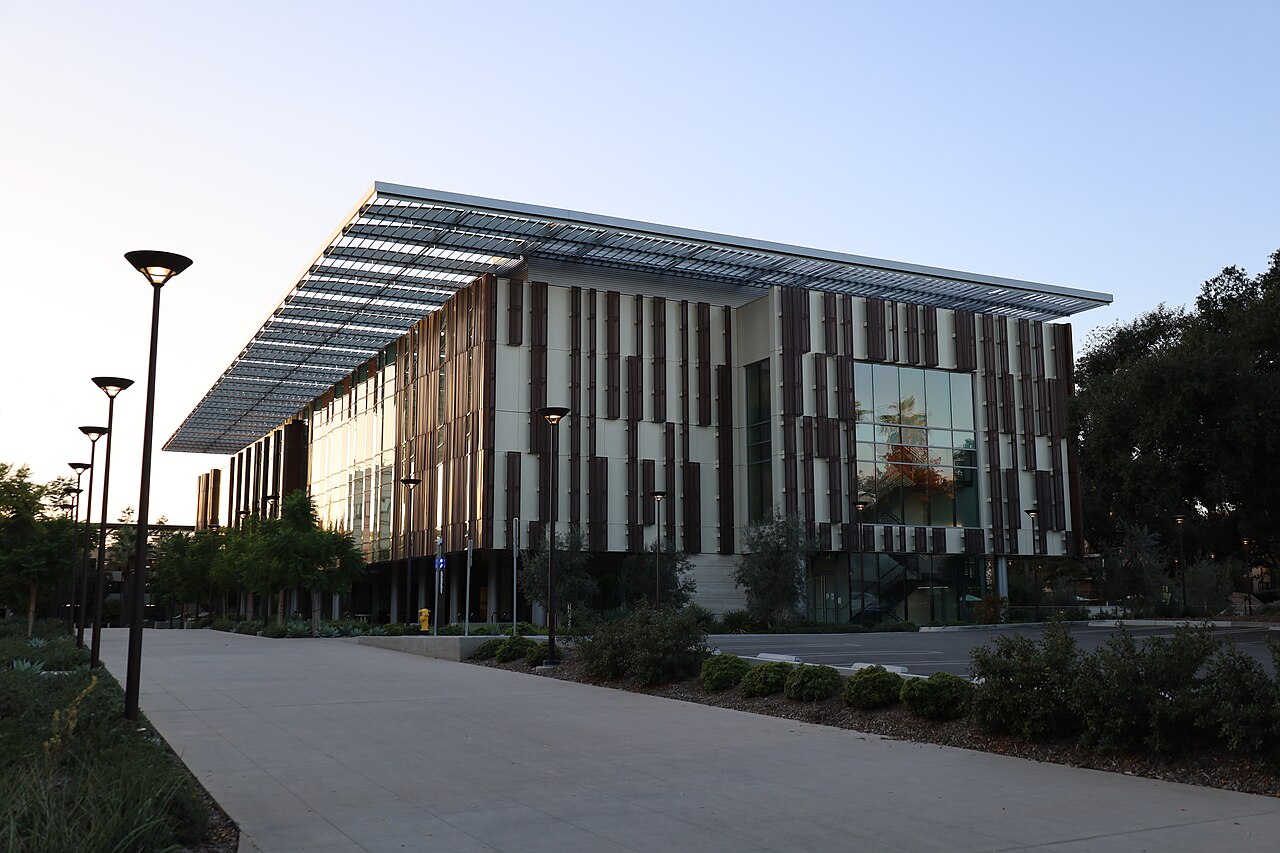
Illustrative photograph: Chen Laboratory Caltech 2022a.jpg by Antony-22, CC BY-SA 4.0. The image does not depict the announced product or event.

Primary source: NVIDIA's October 27 report (2026-10-27). Original Chirvy analysis updated October 30, 2026.
0 views

Chirvy Editor
Editorial account for Chirvy.
Replies 0
Log in to join the conversation.
It is quiet here. Be the first to reply.