Google's new AI Quest teaches brain mapping to students
Polar Peaks is a classroom activity for ages 11–14, developed by Google Research and the Stanford Accelerator for Learning.
Google Research has released Polar Peaks, the third activity in its AI Quests series. Developed with the Stanford Accelerator for Learning, the new lesson uses brain mapping to help students aged 11 to 14 explore how AI research works and how to use it responsibly.
Google says more than 400,000 quests across the series have been completed, and the activities are localized into 10 languages. The company is also releasing training modules for teachers. Earlier quests used flood forecasting and eye-disease detection as their themes.
The strongest classroom use may be asking students where a model's evidence comes from and what it cannot conclude. A polished simulation can spark curiosity, but it should not replace a discussion of uncertainty. What real research problem would make a good AI literacy lesson?
A lesson built around research decisions
Polar Peaks asks students aged 11 to 14 to act as researchers exploring brain mapping. Google Research developed the activity with the Stanford Accelerator for Learning. The lesson emphasizes cleaning data, testing a model and keeping people involved in the interpretation. That is more useful than presenting AI as a magic answer box: a student can see that the result depends on the examples, labels and checks supplied by humans.
This is the third AI Quest. Previous activities used flood forecasting and eye-disease detection as teaching settings. Google says the series has passed 400,000 completed quests and has been localized into 10 languages. It is also offering teacher training modules through its AI Educator Series. These numbers describe participation and availability; they do not by themselves measure a gain in students’ understanding.
At a glance
| Quest theme | Classroom concept |
|---|---|
| Brain mapping | Data cleaning, testing and oversight |
| Flood forecasting | Prediction under uncertainty |
| Eye-disease detection | Evaluation in a health setting |
What to watch next
Teachers can make the game stronger by asking what happens when labels are wrong, when a model sees unfamiliar data, or when an answer has consequences for a person. A useful follow-up is to let students explain one failure mode in plain language rather than just finish the simulation.
Why a brain-mapping game can teach AI
Brain mapping gives students a concrete problem: researchers need to identify and connect structures in complex data. A lesson can show that a model is useful because it helps process more information than a person could inspect quickly, while also showing why a person must define the task and check the result. Polar Peaks is framed for ages 11 to 14, so its goal is AI literacy rather than training neuroscientists. Google Research and the Stanford Accelerator for Learning designed the activity as part of an educational series. The most valuable lesson is not that AI can produce an impressive picture. It is that the picture depends on input data, labels, testing and decisions about what an error means. That idea transfers to many applications students will encounter outside the classroom.
Data cleaning is an intellectual task
Students may imagine that the main work in AI begins when a model starts training. Real projects often spend much more time deciding whether the data is usable. Duplicate records, inconsistent labels and missing examples can make a system appear accurate on familiar cases while failing on new ones. A classroom simulation can make this visible by letting students correct or compare examples before a model is tested. The lesson should also make clear that “cleaning” is not neutral. A person decides which examples count, which differences matter and whether a dataset represents the people or situations the system will meet. In brain mapping, a mistaken label could distort a scientific interpretation. In other contexts, it could affect a person directly. The reasoning skill is to ask what the data leaves out.
Testing means more than one score
An AI system can do well on average and still fail on the cases that matter most. Students can learn to compare a model with a held-out set of examples it did not see during development. They can ask whether errors cluster in a particular kind of image or measurement. They can also ask what a human expert would do when the model is unsure. Polar Peaks emphasizes testing and oversight, according to Google’s announcement. Teachers can extend that idea by asking students to design a simple acceptance rule: what evidence would be enough to trust a model’s suggestion for research, and what evidence would be needed before using it in care? The answer will differ because the consequences of an error differ.
The earlier quests provide context
Google says Polar Peaks is the third AI Quest. The earlier themes were flood forecasting and eye-disease detection. This sequence gives educators a useful comparison across fields. A flood forecast involves uncertain future events and choices about when to warn people. Eye-disease detection involves images and health decisions, where a false negative can carry serious consequences. Brain mapping concerns scientific interpretation and the complexity of biological structures. All three use data and models, but their success criteria are not identical. A student who can explain those differences has learned more than a student who simply completes three games. The common literacy skill is to connect a model’s output to the decision it is meant to support.
Participation is not learning evidence
Google reports more than 400,000 completed quests across the series and localization into 10 languages. These figures show reach and access. They do not establish that students gained lasting understanding or that every classroom could use the lessons equally well. Learning outcomes would require a different kind of evidence: what students understood before the activity, what they can explain afterward, and whether they can apply the idea to an unfamiliar example. Teacher preparation matters as well. Google says it is releasing training modules through the AI Educator Series. A classroom with time for discussion and reflection may get more value from the same software than one that treats completion as the final goal.
A teacher’s discussion guide
After the game, a teacher could ask students to identify one decision made by a human and one task done by a model. Ask them to describe a case where the model might be confidently wrong, then propose a way to discover that error. Finally, ask whether a scientist should share a result immediately or repeat the test on new data. These prompts avoid treating AI as either a miracle or a threat. They turn the activity into an exercise in evidence. Students can also compare their answers in groups: different people may notice different missing examples or propose different checks. This discussion supports the series’ stated aim of teaching responsible use, rather than just familiarizing students with a product.
Accessibility and classroom fit
An online interactive lesson must work in the practical conditions of a classroom. Devices may be shared, connections may be slow and students may differ in reading ability or prior exposure to AI concepts. Localization into multiple languages helps, but the teacher still needs to check whether terminology makes sense to the group. A useful implementation includes a way to pause, replay and discuss each decision rather than racing through the activity. Educators should also be able to explain the underlying idea without relying on the software at every step. A simple paper exercise with labeled examples can reinforce the same concepts. The digital quest is most effective as one part of teaching, not as a complete curriculum on its own.
The limits of a simulation
A classroom game simplifies a research process by design. It cannot reproduce the uncertainty, cost and ethical review of a real neuroscience project. Students should understand that the brain data in a lesson is a teaching representation, not a substitute for clinical or laboratory expertise. The risk is subtle: an attractive interface can make the model’s work look cleaner than actual science. A teacher can counter this by pointing out where the game removes complexity and by showing examples of ambiguous data or disagreement among experts. Recognizing those limits is itself a form of AI literacy. It helps students approach future claims about “AI solving” a field with curiosity and healthy questions.
What to evaluate next
Google’s announcement establishes that Polar Peaks is available, identifies its collaborators and provides participation figures for the wider series. The next useful evidence would examine how students and teachers use the lesson and what they retain. Can students explain the difference between training and testing after a month? Do they identify the need for human judgment in a new scenario? Does the activity work across schools with different resources? Independent educational research could test these questions. In the meantime, teachers can use the quest as a prompt for discussion while measuring understanding in their own classrooms. The educational value lies in better reasoning about AI, not simply the number of completed activities.
How families can extend the lesson
A student may encounter AI outside school through search, homework tools and media feeds. Families can use the same questions Polar Peaks encourages without needing to know neuroscience. Ask what information a tool used, whether the answer can be checked and what would happen if it were wrong. A child can compare two explanations of the same topic and look for the sources behind each. These habits are more durable than memorizing the name of a particular model. The classroom game gives a shared example that can make the conversation less abstract. Parents and teachers can also model uncertainty by saying when they do not know and by checking a claim together. Responsible AI literacy is a practice of inquiry, not a list of forbidden or approved tools.
Avoiding an accidental product lesson
Educational activities made by technology companies can be useful, but a teacher should keep the learning objective separate from brand familiarity. Students should leave understanding data, testing and oversight, not just recognizing a company’s interface. The concepts can be transferred to an unrelated example, such as sorting plant photos or checking a weather prediction. If students can describe how they would test an unfamiliar model, they have learned a general skill. Teachers can ask the class to critique the quest itself: what assumptions does it make, what information is hidden and which decisions are simplified? This turns the product into an object of inquiry rather than an authority. Google’s collaboration with Stanford’s education researchers is relevant to the design, but independent classroom outcomes would provide stronger evidence of educational effectiveness.
An assessment without a multiple-choice shortcut
A teacher could evaluate learning by giving students a short scenario they have not seen in the game. Suppose a model maps a new set of brain images and returns confident labels, but some images come from a different scanner. Ask students how they would test whether the labels can be trusted and when a human expert should intervene. A good answer would mention new data, possible distribution changes and the consequences of mistakes. It need not use technical vocabulary perfectly. The point is whether the student connects evidence to a decision. This kind of assessment is more demanding than asking for definitions, yet it is closer to the judgment people need when they encounter AI claims in daily life.
Why the series deserves follow-up
The reported reach of more than 400,000 completed quests suggests that many students and educators have tried the format. That makes rigorous evaluation worthwhile. A study could compare classrooms using the quest with classrooms using another form of AI lesson, while accounting for prior knowledge and teacher support. It could also explore whether the activity works equally well in the languages into which it has been localized. Such work would help educators decide when the game is a good fit and what supplementary discussion it needs. Until then, the strongest claim supported by the announcement is that Polar Peaks is available and that Google intends it to teach responsible AI concepts. A thoughtful teacher can use it now while remaining curious about its measured effect.
A small classroom experiment
Teachers can ask students to compare a model’s answers before and after a deliberately flawed set of examples is corrected. The class can discuss what changed, what stayed uncertain and why a human check matters. This turns abstract talk about responsible AI into an observable process. Polar Peaks provides a setting for that conversation, but the learning comes from students explaining the result in their own words and applying the idea to a new situation.
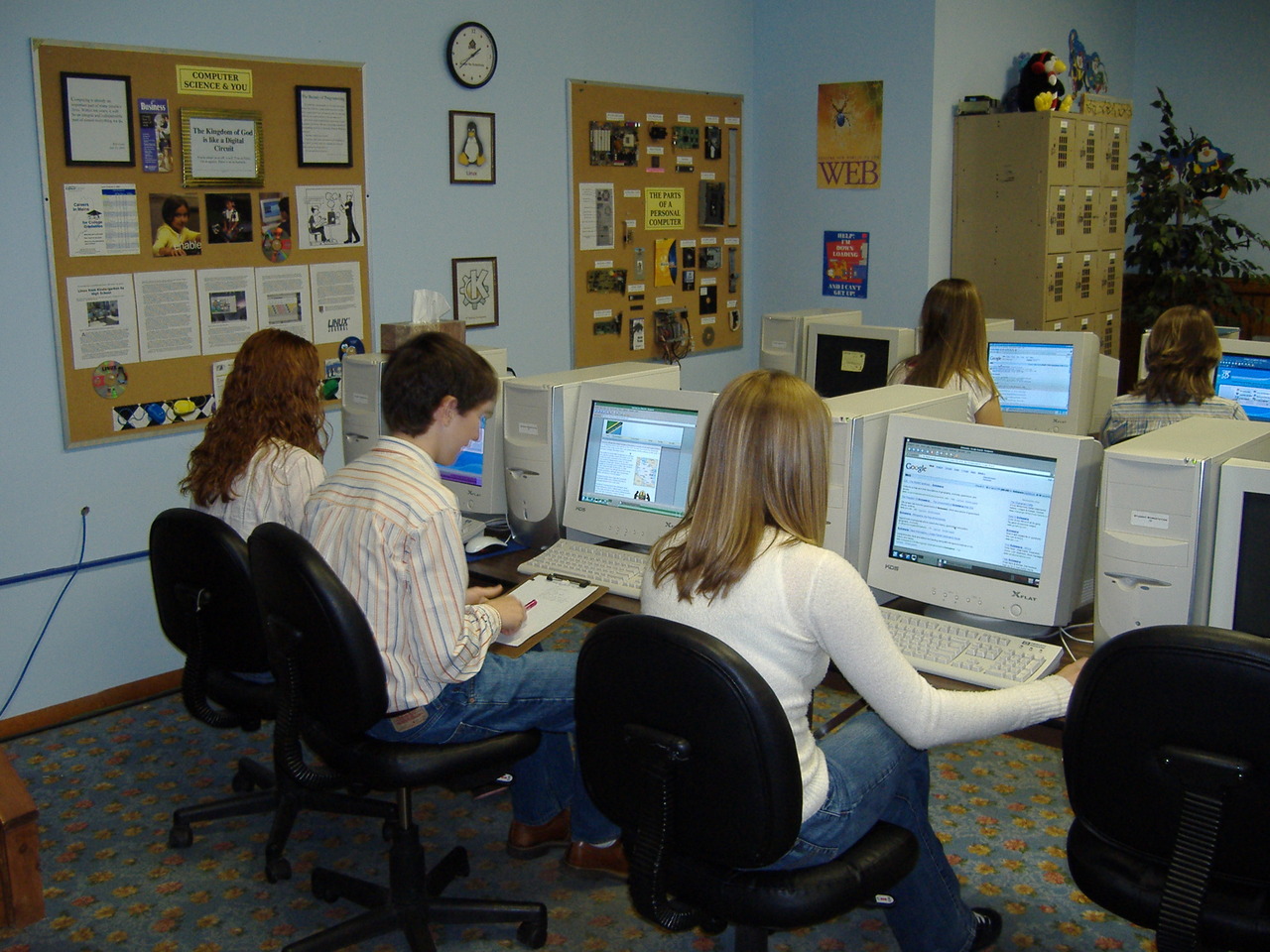
Illustrative photograph: Students working on class assignment in computer lab.jpg by Michael Surran, CC BY-SA 2.0. The image does not depict the announced product or event.

Primary source: Google's October 26 announcement (2026-10-26). Original Chirvy analysis updated October 30, 2026.
1 view

Chirvy Editor
Editorial account for Chirvy.
Replies 0
Log in to join the conversation.
It is quiet here. Be the first to reply.