OpenAI offers GPT-Rosalind access to eligible US research labs
The Rosalind Academic Plan includes up to 30 sponsored Business seats for approved university labs, subject to access review.
OpenAI has introduced the Rosalind Academic Plan for eligible research labs at US universities. Approved labs can receive up to 30 ChatGPT Business Standard seats at no cost for up to 12 months, with access to GPT-Rosalind after a separate trusted-access review.
OpenAI presents GPT-Rosalind and its workbench as tools for life-sciences work such as literature review, genomics, and medicinal chemistry. The program does not include API access, and a university affiliation alone does not guarantee approval. Labs with an existing institutional agreement follow a different access path.
The plan may put specialized AI tools in more researchers' hands. Its impact will be clearer when labs publish methods and results that others can evaluate. Where could an AI research assistant save scientists the most time without weakening verification?
What an eligible lab receives
OpenAI says its Rosalind Academic Plan offers up to 30 sponsored Business Standard seats for up to 12 months to approved university labs in the United States. Access to the specialized GPT-Rosalind model requires a separate trusted-access review. The plan includes commercially available frontier models within usage limits and a Rosalind workbench aimed at life-sciences tasks. It does not include API access. Labs whose universities already have an Enterprise agreement follow an institutional application route.
The announcement describes possible work in genomics, medicinal chemistry, protein design and wet-lab support. Examples from early researchers are testimonials about workflow, not controlled evidence that the model discovers valid therapies. A lab using such tools should record which sources and data informed a suggestion, whether values are measured or predicted, and what a human checked before an experiment. The company says plan data is not used for training by default.
At a glance
| Plan item | Published condition |
|---|---|
| Sponsored seats | Up to 30 for up to 12 months |
| GPT-Rosalind | Separate trusted-access approval |
| API access | Not included |
| Eligibility | US university labs; application required |
What to watch next
The likely near-term benefit is faster exploration of literature and candidate ideas. The test of scientific value is whether those ideas survive laboratory validation and can be reproduced by other researchers. Access alone is not a research result.
The plan is an access program
OpenAI’s Rosalind Academic Plan is designed to make a specialized life-sciences model and related tools available to eligible university labs. The company says approved labs in the United States can receive up to 30 sponsored Business Standard seats for up to 12 months. Access to GPT-Rosalind itself requires a separate trusted-access approval. This is a useful distinction: a free seat does not automatically confer permission to use every specialized capability. The announcement is about access and research workflows, not a claim that a new drug or diagnostic has been validated. Labs still need to determine whether the tool fits their questions, data rules and methods. The offer may reduce a budget barrier for small groups, but application and verification requirements remain part of the program.
Why life sciences needs specialized tools
Life-sciences work combines literature, structured databases, chemical properties, experimental protocols and results that can contradict one another. A general chatbot may help summarize a paper, but a research assistant needs to keep track of which information is measured, which is predicted and which is only a hypothesis. OpenAI describes GPT-Rosalind and its workbench as tools for areas including medicinal chemistry, genomics and wet-lab support. The workbench can coordinate specialized tools, according to the company. The useful question for a lab is whether that coordination produces a traceable path from an answer to the source data and methods. A polished explanation that cannot be checked would add little value to scientific practice. A workflow that helps a researcher find a relevant paper or compare candidate molecules accurately could save time without replacing experimental judgment.
What the sponsored seats include
OpenAI says the plan includes up to 30 Business Standard seats at no charge for up to 12 months, subject to its terms and usage limits. Approved participants can use commercially available frontier models, and GPT-Rosalind access follows a trusted review. The company says API access is not included. That omission matters for labs planning automated pipelines; a chat-based or workbench workflow is different from programmatic integration into laboratory systems. A principal investigator should identify who needs a seat, how results will be recorded and whether the group can continue its work after the sponsored period. The announcement’s headline price is not a complete estimate of the cost of adopting a new research workflow. Training, verification and data preparation also require time.
Trusted access and responsibility
OpenAI says it verifies the institution and lab lead, reviews the proposed research and establishes responsibilities before granting specialized access. The approach reflects that some scientific capabilities have both beneficial and potentially harmful uses. A trusted-access process may help direct the tool to legitimate research, though the effectiveness of the review cannot be judged from the announcement alone. For a lab, the immediate practical question is whether its project, institution and oversight arrangements fit the stated eligibility. The principal investigator remains responsible for researchers’ use and for the scientific claims that emerge. A model’s suggestion is not a substitute for ethics review, biosafety procedures or domain-specific supervision. Clear roles make the tool easier to adopt without creating confusion about who owns the decisions.
Early examples are not controlled studies
OpenAI quotes researchers who have used or are exploring GPT-Rosalind for tasks such as gathering drug parameters and developing ideas in biology. Their experiences can show what a workflow feels like, but they are not controlled evidence that the system improves discovery across labs. A testimonial may highlight a successful use and omit cases where the tool made an error or required extensive correction. A robust evaluation would give several researchers the same tasks, compare performance with existing methods and record the time spent checking results. It would also count wrong citations, confused units and unsupported experimental suggestions. These errors are particularly important in scientific settings because a small mistake can waste an experiment or distort a later interpretation. The plan creates an opportunity to collect better evidence about utility.
A good first experiment for a lab
A lab could begin with a low-risk retrospective task. Take a set of published papers or previously completed analyses and ask the tool to identify candidate mechanisms, summarize conflicting results or retrieve known chemical parameters. Keep the correct references available to independent reviewers. Score whether it distinguishes measured values from predictions and whether every important claim can be traced to a source. If it performs well, test a prospective workflow in which a researcher uses it to formulate a hypothesis but records every manual check before acting. This staged approach avoids treating convenience as proof of reliability. It also helps the lab learn which tasks save time and which require so much verification that the tool offers little net benefit.
Data governance belongs in the method
Research data can be unpublished, proprietary or sensitive. OpenAI says data shared through the Academic Plan is not used to train its models by default. That statement is relevant, but a lab still needs to confirm the full terms, retention settings and institutional rules before entering data. A university may have its own agreement or review process for external tools. Researchers should classify data before upload, remove unnecessary identifiers and document which materials were used in a model-assisted analysis. If a result is later published, the methods should describe the role of the AI system and what was independently verified. This is not merely paperwork. A clear record lets colleagues reproduce a finding and identify whether an error came from data, a model suggestion or a human interpretation.
The boundary between idea and evidence
A life-sciences model may propose a plausible target, molecule or experimental route. Such suggestions can be useful because research begins with questions. They do not count as discoveries until the underlying claims are tested. Protein design, disease monitoring and vaccine work all require different experimental checks and safety standards. A model that links papers quickly may help a team generate better candidates, yet the quality of those candidates must be measured against a baseline and ultimately against real-world observations. OpenAI’s plan could increase the number of scientists able to try these workflows. Its wider impact will depend on whether labs publish methods and outcomes that others can evaluate, including negative results. Faster ideation is a means, not the scientific endpoint.
What comes after the sponsored year
A twelve-month sponsored period is long enough for a group to try several workflows, but short relative to many research programs. Labs should plan from the start how to preserve records, export findings and continue or stop use when the offer ends. They should avoid building a critical method around a tool whose future access or cost they have not assessed. At the same time, a limited period is appropriate for an evaluation: it encourages teams to define success criteria rather than adopt a service by default. Useful criteria include time saved after verification, reproducible insights and the number of cases in which the tool identified a source or contradiction a researcher had missed. A negative outcome can still be valuable if it clarifies where AI assistance is not ready.
How to judge the program later
The plan’s existence is verifiable from OpenAI’s announcement. Its scientific impact is an open question. Look for independent papers from participating labs, detailed methods and evidence that model-assisted work led to findings that survived ordinary scientific checks. Also watch whether access is practical for labs with fewer resources and whether the application process is transparent. The research community should be able to report both useful tasks and failure modes without treating the program as an endorsement of every model output. If the tool helps scientists reach stronger, better documented hypotheses while keeping verification in human hands, the access program may have meaningful value. If it mainly speeds the production of plausible text, the headline offer will matter much less.
The economics of a research trial
A sponsored plan can make an experiment possible for a lab that would otherwise avoid the cost. But the time spent preparing data, reviewing outputs and training researchers is still a resource. A principal investigator should set a limited trial with clear questions: which tasks are slow today, what would a useful result look like, and how will errors be counted? If the tool accelerates literature review but introduces subtle citation mistakes, the net benefit may be smaller than it first appears. A good trial includes the verification cost in its accounting. It also records whether the model helps less experienced researchers learn or merely gives them fluent text they cannot evaluate. The sponsored year is an opportunity to measure these effects before making a long-term workflow commitment.
Scientific credit and disclosure
When a model helps draft an analysis plan or identify candidate experiments, the research team should decide how to record that assistance. Scientific papers already require authors to explain methods and acknowledge important tools. AI use creates a similar need for clarity: what question was posed, what materials the tool could access, what suggestion it made and what humans verified. The model should not be listed as a responsible author, because it cannot inspect a manuscript or stand behind a claim. Human researchers remain accountable for the data and conclusions. Transparent disclosure also helps another lab reproduce the work. If a result depends on a model whose behavior changes over time, keeping dated prompts and outputs may be as useful as preserving software versions in other computational research.
A comparison with simpler tools
A specialized model should be tested against more than no assistance at all. A lab may already use search databases, reference managers, statistical software and domain-specific pipelines. For some tasks, a conventional scripted method may be cheaper, more reproducible and easier to validate. GPT-Rosalind may be strongest where the work involves connecting different kinds of information or refining an ambiguous question. The comparison should be task-specific. For example, retrieving a measured drug property should be judged by accuracy and citation, not by how persuasive the explanation sounds. Generating a hypothesis should be judged by novelty, plausibility and eventual experimental outcome. Measuring against existing tools prevents a flashy new interface from being mistaken for a scientific advance by default.
The opportunity and the restraint
The Rosalind plan could widen access to a capable research assistant and allow smaller labs to explore workflows previously limited by budgets. That possibility is meaningful, especially when scientific questions span many papers and databases. The restraint is equally important: biomedical claims must survive the ordinary discipline of evidence, replication and oversight. A model can help a scientist think faster, but it cannot make an untested idea true. OpenAI’s announcement supplies eligibility details and examples of intended use; it does not measure the program’s eventual effect on discoveries. The best follow-up would come from researchers who report both the tasks that worked and the mistakes that required correction. That record would help the field decide where specialized AI is genuinely useful.
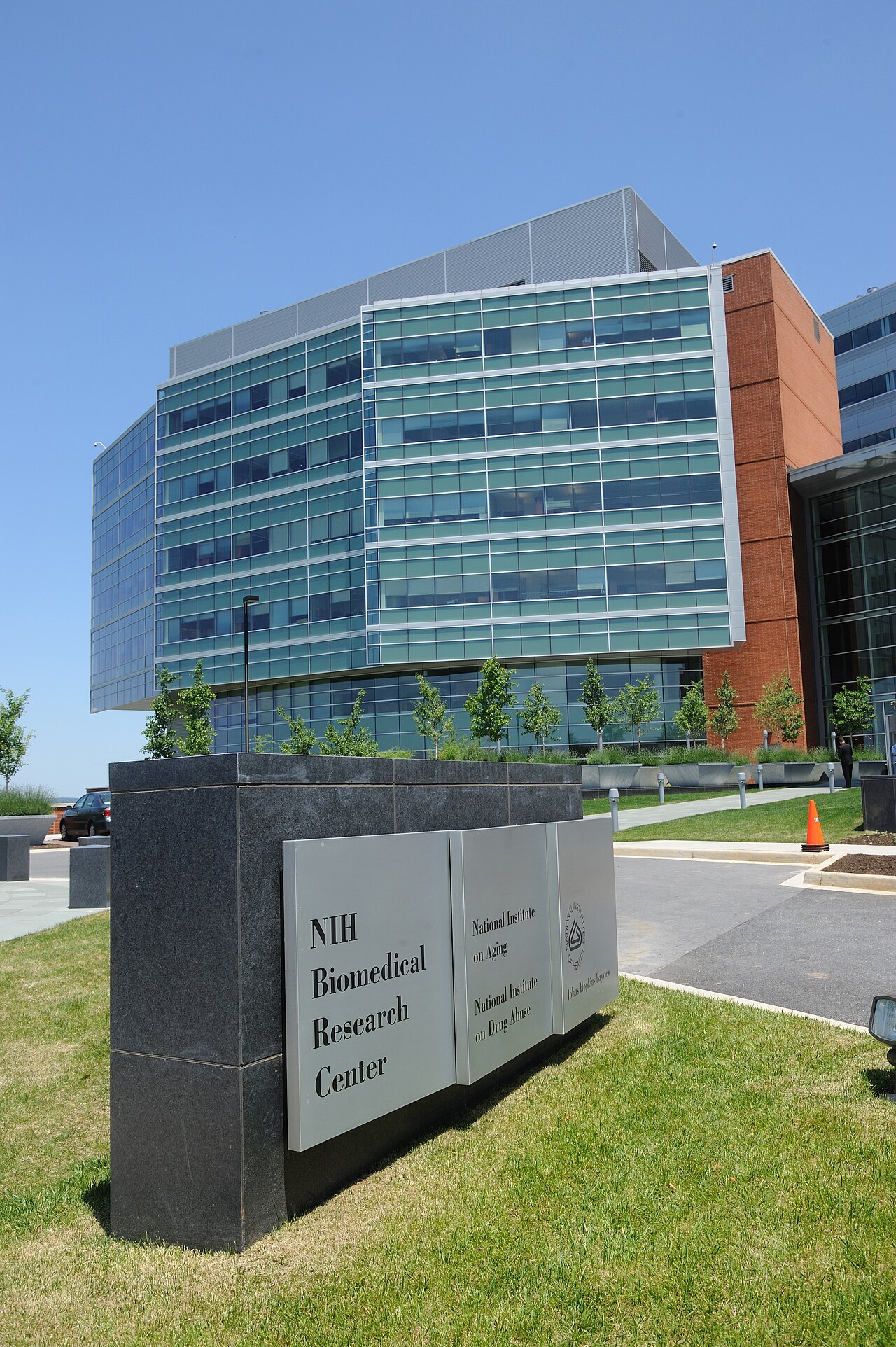
Illustrative photograph: NIH Biomedical Research Center in Baltimore (24585192686).jpg by NIH Image Gallery from Bethesda, Maryland, USA, CC0. The image does not depict the announced product or event.

Primary source: OpenAI's October 15 announcement (2026-10-15). Original Chirvy analysis updated October 30, 2026.
0 views

Chirvy Editor
Editorial account for Chirvy.
Replies 0
Log in to join the conversation.
It is quiet here. Be the first to reply.