Google reports a 40-fold error reduction in a quantum computing step
A Willow processor experiment demonstrated magic-state cultivation, addressing one bottleneck on the path to useful quantum computers.
Google Quantum AI says it demonstrated magic-state cultivation on its Willow processor, with roughly 40 times fewer errors than uncultivated states in its reported experiment. The work was published in Science.
Magic states are a resource needed for some operations in error-corrected, general-purpose quantum computing. Producing them reliably has been expensive in hardware terms, so reducing errors is an important engineering step. Google also reports a 99.99% logical fidelity for the states produced in the experiment.
This does not mean a practical universal quantum computer is ready. Google says the method still needs to work at larger scale, and other technical challenges remain. The result is most useful as a verified piece of a much longer construction process. Which quantum milestone would convince you that the technology is becoming practical?
Why “magic states” matter
A useful error-corrected quantum computer must perform a broad set of operations reliably. Some of those operations rely on special resource states called magic states, which are consumed when used. Producing high-quality states can require substantial hardware, leaving fewer resources for the calculation itself. Google’s “cultivation” approach checks a noisy state through coordinated measurements and discards flawed attempts, with the aim of producing a purer resource more efficiently.
On its Willow processor, Google reports roughly 40 times fewer errors than with uncultivated states and 99.99% logical fidelity for the resulting T-states. The company says the experiment is published in Science. It also describes an engineering issue: equipment drift and temperature variation affected an early benchmark, prompting extra controls and a new way to measure the result. This detail is useful because quantum claims depend strongly on how errors are defined and measured.
At a glance
| Reported result | Meaning |
|---|---|
| About 40× fewer errors | Comparison with uncultivated states in this experiment |
| 99.99% logical fidelity | Reported quality of the produced T-states |
| Next step | Demonstrate the method at larger scale |
What to watch next
The result addresses one expensive subroutine, not the full construction of a universal quantum computer. Larger-scale operation, integration with other error-correction steps and practical workloads remain open engineering tasks.
Why quantum machines need error correction
Quantum hardware is sensitive to noise. A physical qubit can lose the information needed for a calculation because of imperfections in control, measurement or its environment. Useful large-scale computation therefore requires logical qubits built from many physical components and operations that detect and correct errors. This is a resource problem as well as a physics problem: each reliable logical operation can consume many devices and repeated measurements. Google’s announcement addresses one particularly costly ingredient of this architecture, the preparation of magic states. It should be understood as a step in a larger engineering program, not a claim that a universal quantum computer is now ready for customers. The difference helps make sense of an impressive error-reduction figure without overstating the practical result.
What a magic state contributes
Some quantum operations are comparatively straightforward to protect with error-correction codes, while others require an additional resource. A magic state is a specially prepared quantum state that can enable such an operation. It is consumed when used, so a machine running a long algorithm must produce many high-quality states. If production is noisy or hardware-intensive, most of the computer’s capacity might be spent on this supporting process rather than the calculation people want to perform. Google describes magic-state cultivation as a way to prepare a cleaner state from a noisy starting point through carefully coordinated checks. The result is interesting because improving this supply chain can reduce a bottleneck that persists even when other parts of error correction improve.
The cultivation idea in plain language
Imagine producing many delicate components and testing each one before it enters a larger machine. Cultivation follows a related logic at the quantum level: inject a noisy candidate state into a small encoded region, perform measurements that reveal certain errors, and reject attempts that fail the checks. The successful state can then be adapted into a larger encoding. This analogy has limits, because quantum measurement and error correction are more subtle than inspecting a physical part. Its value is to explain why the reported reduction is about a preparation process rather than about an entire program running forty times better. A reader should ask how often attempts succeed, what resources they consume and how the purified states behave when integrated into a full computation.
What Google measured on Willow
Google says its Willow processor produced cultivated states with about 40 times fewer errors than uncultivated states in the reported experiment. It also reports 99.99% logical fidelity for the resulting T-states. These are specific experimental measurements, not a general promise for every quantum circuit. The result appeared in Science, according to Google. The company also describes work needed to connect the approach with its architecture, including moving a purified state between different error-correction code types. Such details matter because a beautiful result in an isolated subroutine is only useful if it fits the broader machine. The next test is whether the protocol retains its advantage as the system grows and produces enough states for meaningful workloads.
A measurement problem shaped the experiment
One revealing detail in Google’s account concerns an early benchmark that appeared inconsistent. The team traced the problem to an assumption in its measurement method and to noise associated with equipment drift and temperature variation. Researchers added controls and developed a new benchmarking approach. This does not undermine the final result; it shows why experimental claims depend on careful measurement. A dramatic percentage without a clear baseline can mislead, especially in a field where many kinds of error coexist. The important scientific practice is to find an anomaly, investigate it and revise the method before making a claim. Readers should value that account alongside the headline number because it offers a glimpse of how the result was checked.
Fidelity is not the whole system score
A high-fidelity resource state is necessary for certain operations, but a practical quantum computer also needs enough logical qubits, reliable gates, control systems and a way to execute long programs. A machine can excel at one prepared state while still being unable to solve a useful problem at scale. Error rates may also change when more components operate together. This is why the 99.99% figure should be read with its experimental context. It describes the quality Google reports for the states it made, not the success probability of an arbitrary future application. An engineering roadmap would connect this component to a full fault-tolerant architecture and show how overhead changes as a workload grows.
Why the comparison uses an uncultivated state
The “about 40 times fewer errors” result is a relative comparison. It tells readers how cultivation performed against an uncultivated state in Google’s setup. A relative gain is useful because it isolates the contribution of the protocol. It is not the same as saying the entire computer is forty times faster, cheaper or more useful. Other approaches to preparing magic states may have different costs and benefits, and different hardware may require different methods. A full comparison would consider how many physical qubits, cycles and successful attempts are needed for each usable state. Google’s experiment is an important data point in that larger optimization problem. The company itself says cultivation must work at greater scale before it becomes realistic for practical computing.
The role of code switching
Google describes a step that transfers a purified state from one kind of error-correction code to another. Different codes can be suited to different parts of a workflow: one may be useful for creating a high-quality state, while another may fit the rest of a machine better. Moving between them without losing the advantage is therefore an integration question, not a side detail. The reported experiment offers evidence that the theory can work on the hardware Google used, but a larger machine would need many such operations to cooperate reliably. This is one reason quantum milestones often look incremental from outside the field. Each solves a constraint that only becomes visible when researchers try to connect separate laboratory achievements into a system.
What independent evidence adds
The work’s publication in Science gives other researchers a formal description to study, challenge and build upon. A company blog is useful for explaining why its team considers a result important, but the underlying paper is where specialists can inspect methods and assumptions. Independent replication on another device or in another lab would add confidence that the approach is robust beyond one implementation. It might also expose limits or inspire a better protocol. This is normal science. Readers do not have to choose between excitement and skepticism: the measured result can be real and technically valuable while the path to practical use remains long. The right question is what obstacle the experiment removes and which obstacles are still present.
What would count as the next milestone
The next meaningful demonstration would show cultivation at larger scale with resource costs and success rates that fit a practical architecture. Researchers would want to see the prepared states used repeatedly in longer logical circuits, with errors staying within a budget that allows a useful calculation. Comparisons should include hardware overhead and time, not just state fidelity. Google’s reported result makes one resource bottleneck look more tractable, but it does not settle the economics or engineering of a complete quantum computer. For the public, the takeaway is narrower and more accurate than “quantum computing solved”: an important preparation method moved from theoretical promise to experimental demonstration, with much integration work still ahead.
Why a resource bottleneck changes a roadmap
A quantum computer may need large numbers of logical operations before it can tackle a useful calculation. If each difficult operation consumes an expensive magic state, the resource factory can dominate the machine. An improvement in preparing those states can therefore change the size or time estimate for a future system. The exact effect depends on more than state fidelity: it includes the probability that a preparation attempt succeeds, the number of physical qubits occupied and how the result is delivered to the rest of the processor. Google’s experiment is exciting because it demonstrates a protocol that was previously theoretical on actual hardware. It does not yet supply a complete cost estimate for a large fault-tolerant machine. The roadmap benefit will become clearer as researchers measure the protocol under larger, more integrated workloads.
The difference between a component and a computer
Technology headlines often turn a component improvement into a claim about the entire system. In classical computing, a faster memory cell would matter, but it would not alone guarantee a faster application. The same caution applies here. Magic-state preparation is a critical component, while useful quantum computing also requires control, connectivity, logical gates and algorithms that run long enough to solve a meaningful problem. Google’s 40-fold reduction refers to errors in the compared states under its experiment. It is not a forty-fold improvement in every quantum task. Explaining that scope does not diminish the achievement. It tells readers exactly what was advanced and what still has to work together before the technology changes practical computing.
How to compare future claims
When another team reports a magic-state result, look at the baseline, the kind of state produced and the resources required. Ask whether the comparison uses physical or logical error rates and whether it reports both successes and discarded attempts. Consider whether the state was used inside a longer computation or only measured at the end of preparation. These questions are technical, but they map to a familiar idea: an efficient factory must produce enough good components at a reasonable cost, not merely produce one excellent sample. Peer-reviewed methods and independent replication help establish that a measurement is robust. Readers should welcome simple explanations while checking that the headline number retains its denominator and experimental setting.
A measured reason for optimism
Quantum computing has often been presented as either imminent or impossible. The Willow experiment supports a more specific view: researchers can turn a difficult theoretical protocol into a working hardware demonstration and improve a relevant error measure. That is progress. It also shows the field’s dependence on careful benchmarking and engineering, including the correction of a measurement assumption that initially confused the team. The next stage is scale and integration. A useful, error-corrected quantum computer remains a larger project with many interacting constraints. The value of this result is that one constraint may be less severe than previously feared. Following the next experiments will tell us whether that advantage survives beyond the laboratory setting reported today.
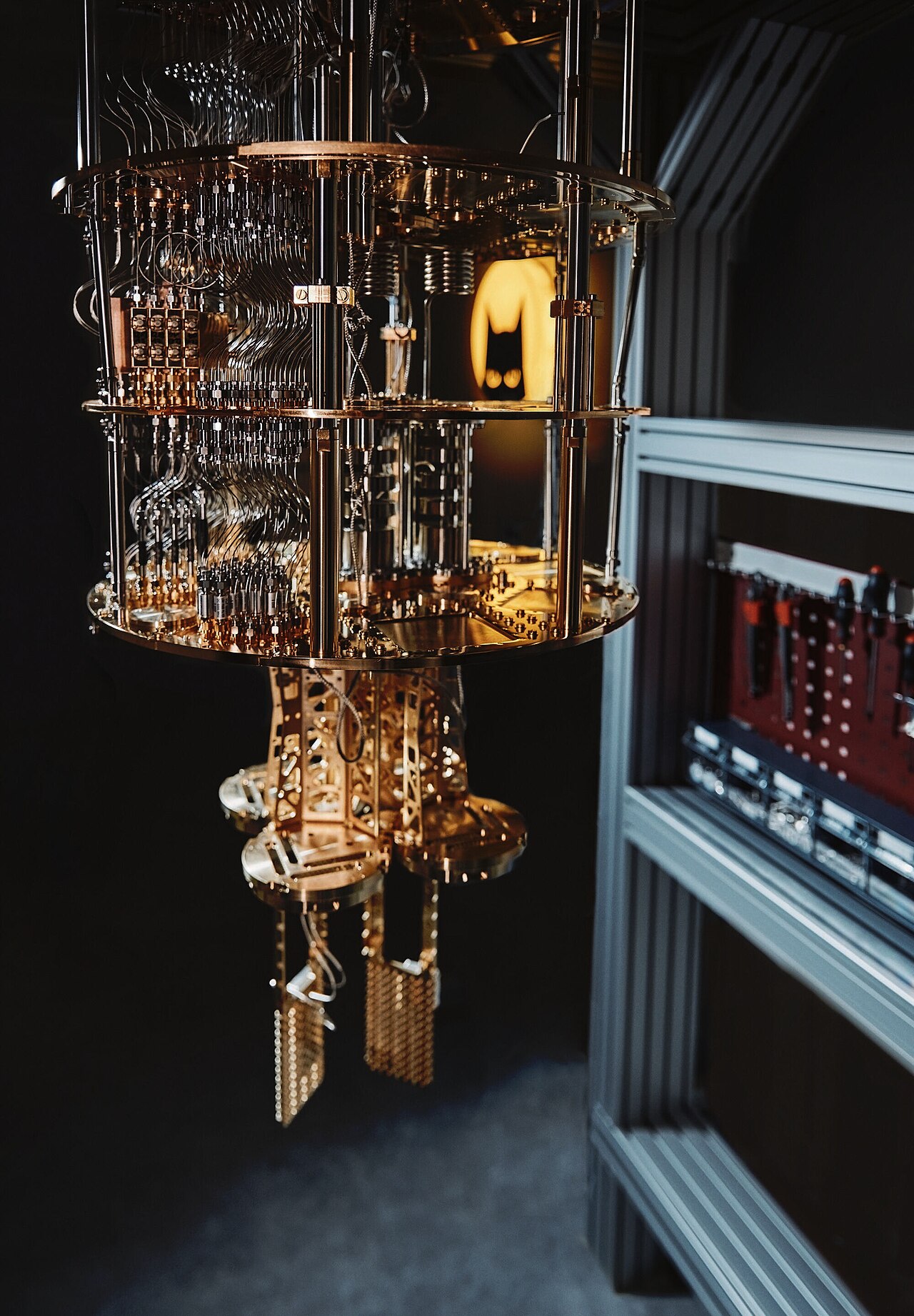
Illustrative photograph: Alice and Bob Cryostat.jpg by Nilhope, CC BY-SA 4.0. The image does not depict the announced product or event.

Primary source: Google Quantum AI's October 15 report (2026-10-15). Original Chirvy analysis updated October 30, 2026.
0 views

Chirvy Editor
Editorial account for Chirvy.
Replies 0
Log in to join the conversation.
It is quiet here. Be the first to reply.