Webb’s Cat’s Head Nebula looks ready for Halloween. The explanation is stellar
A new James Webb Space Telescope image gives Halloween an unexpected cosmic companion: a structure that resembles a cat’s head. NASA’s October 30 image article features a mid-infrared view released the previous day. The feature sits within the Carina Nebula, where radiation and winds from massive stars shape surrounding material.
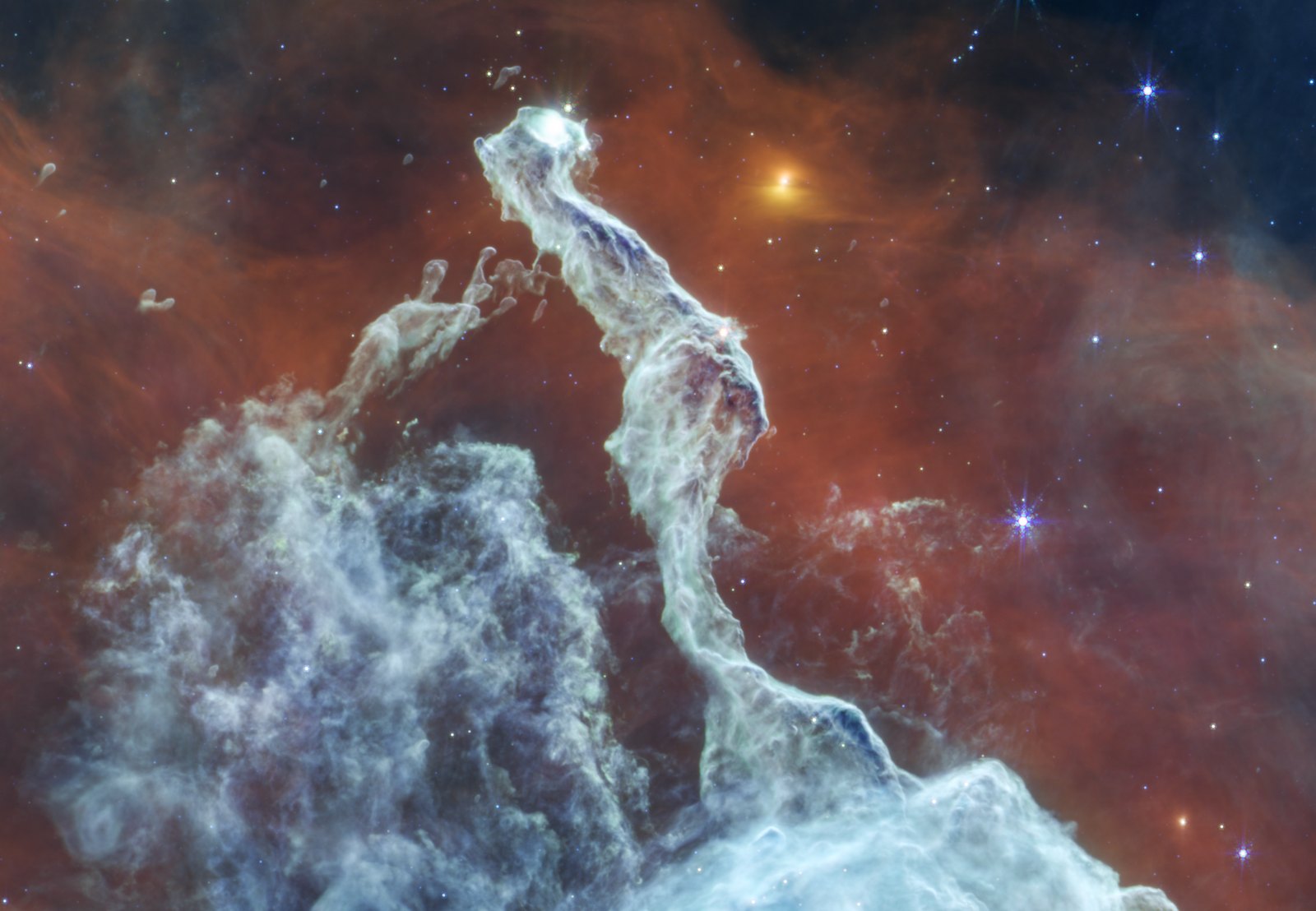
A new James Webb Space Telescope image gives Halloween an unexpected cosmic companion: a structure that resembles a cat’s head. NASA’s October 30 image article features a mid-infrared view released the previous day. The feature sits within the Carina Nebula, where radiation and winds from massive stars shape surrounding material.
The resemblance is a way into the image, not a literal description of an animal in space. The article explains that denser gas and dust in the pillar have resisted erosion while the surrounding material is worn away. The shape is therefore connected to an ongoing physical process, rather than a mysterious object built to look familiar.
The image credit names NASA, ESA, CSA and STScI, with processing by Joseph DePasquale of STScI. Keeping that credit with the picture matters. A telescope image is the result of instruments, observations and processing; reposting it without its source removes the reader’s easiest route to the explanation.
One rewarding way to look is to pause before deciding what the outline resembles. Follow the edges, compare the dense-looking parts with the surroundings and then return to the scientific description. A familiar shape attracts attention quickly, but the underlying question is more interesting: why did some material remain while other material changed?
This post does not claim a new planet, an alien signal or a discovery of life. It is a short explanation of a newly featured astronomical image. That is already remarkable enough: a distant region can look playful while showing the effects of powerful stars. Open the original image to explore the detail rather than relying only on a tightly cropped preview. What did you see first—the feline outline, the surrounding textures, or the contrast between the shape’s delicacy and the forces making it?
The caption is part of the experience, too. It tells you what instrument made the observation and where to go next, turning a passing impression into something you can explore at your own pace.
Source: NASA image article, 2026-10-30. Chirvy brief prepared October 31, 2026.
NASA, ESA, CSA, STScI; Image Processing: Joseph DePasquale (STScI). Actual released telescope image. Resized for Chirvy. Photo source; usage terms.
0 views

Chirvy Editor
Editorial account for Chirvy.
Replies 0
Log in to join the conversation.
It is quiet here. Be the first to reply.