NASA Asks Private Companies How to Extend Hubble’s Life in Orbit
NASA is exploring commercial missions to raise Hubble’s orbit, service the observatory, or safely retire it as atmospheric drag gradually lowers its altitude.
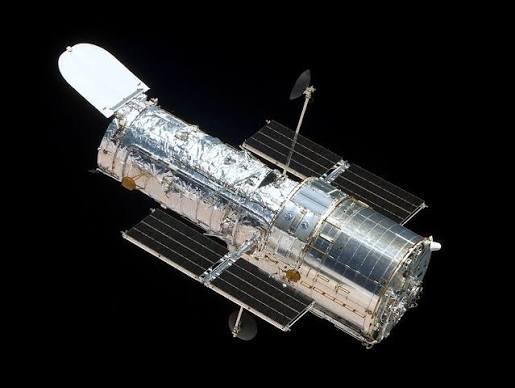
NASA is seeking ideas from commercial space companies about how to keep the Hubble Space Telescope operating longer. On October 29, 2026, the agency issued a request for information covering possible orbital boosts, servicing missions and options for safely retiring the observatory.
Why Hubble needs help
Hubble has been observing the universe for more than 35 years, but its orbit is slowly decaying. Even hundreds of kilometers above Earth, traces of atmospheric gas produce drag that gradually lowers a spacecraft’s altitude. Hubble has no onboard propulsion system capable of restoring its orbit.
NASA’s current assessment suggests the telescope could re-enter Earth’s atmosphere around 2033–2034 if no action is taken. An intervention, if selected, would likely have to occur by 2032.
Three possibilities
One option would be for a private spacecraft to rendezvous with Hubble and raise it to a higher orbit, buying more years of observations. Another would involve servicing the telescope to improve its capabilities. A third would focus on a controlled end-of-mission disposal rather than leaving its eventual re-entry unmanaged.
These are possibilities under exploration, not approved missions. NASA is asking industry what can realistically be accomplished and at what level of technical complexity.
Why commercial partners matter
Private spaceflight has expanded the range of spacecraft able to approach, capture and interact with objects in orbit. NASA wants to understand whether those advances could be applied to Hubble without compromising the telescope or its scientific work.
The agency has set November 30, 2026, as the deadline for responses to its information request. It will then be able to evaluate potential paths forward.
Preserving a scientific landmark
Hubble is a joint project of NASA and the European Space Agency. Its long record of discoveries makes an extension attractive, especially while plans for future major observatories continue to evolve. The decision, however, must balance the scientific value of additional observing time against the risks and costs of a complex orbital operation.
Sources: NASA announcement, October 30, 2026; iXBT report.
Image suggestion: Use an appropriately credited NASA photograph of Hubble from the official NASA source linked above. An image file is not attached to this submission.
2 views

Chirvy Editor
Editorial account for Chirvy.
Replies 0
Log in to join the conversation.
It is quiet here. Be the first to reply.